


The Internet of Things (IoT) has emerged as a powerful and transformative technology in today’s interconnected world. It refers to the network of physical devices, vehicles, appliances, and other objects embedded with sensors, software, and connectivity that enables them to connect and exchange data. The IoT is revolutionizing how we live and work, from smart homes to industrial automation. In this blog post, we will explore the Internet of Things concept and its impact on various aspects of our lives.
- What is the Internet of Things?
The Internet of Things is a vast network of interconnected devices that communicate with each other and exchange data over the Internet. These devices, often equipped with sensors and actuators, collect and transmit information, enabling them to interact with the physical world and respond to their environment. This connectivity opens up possibilities, allowing for automation, data analysis, and remote control.
- Applications of the Internet of Things
The IoT has applications in various sectors, transforming industries and enhancing efficiency. Here are some notable examples:
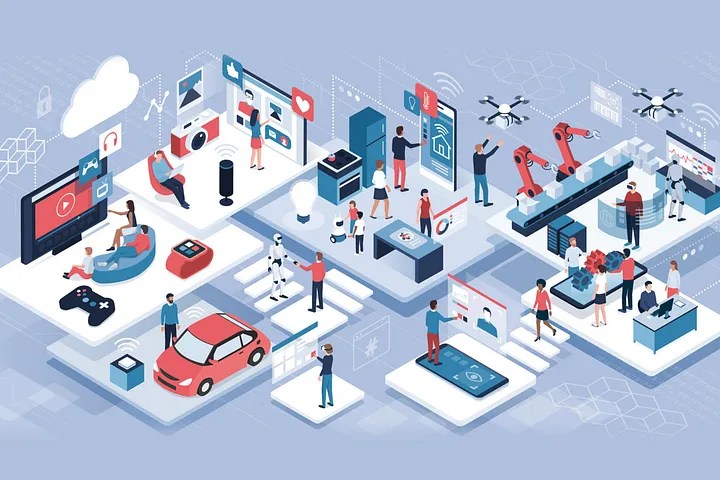
- Smart Homes: IoT-enabled devices such as smart thermostats, lighting systems, and security cameras allow homeowners to remotely control and monitor their homes. These devices can learn user preferences and adapt accordingly, making our living spaces more convenient and energy-efficient.
- Healthcare: IoT devices are revolutionizing healthcare by providing remote patient monitoring, wearable health trackers, and real-time data collection. These advancements improve patient care, enable early detection of health issues, and enhance the overall healthcare experience.
- Industrial Automation: The IoT has made significant strides in industrial sectors, enabling efficient monitoring, predictive maintenance, and optimization of manufacturing processes. Connected sensors and devices collect data, allowing for real-time analysis and decision-making, improving productivity and cost savings.
- Smart Cities: IoT technologies are being employed to create smart cities, where interconnected systems manage resources, enhance safety, and improve the quality of life. Intelligent traffic management, waste management, and energy grids exemplify how IoT reshapes urban environments.
- Benefits of the Internet of Things
The Internet of Things offers numerous benefits, including:
- Improved Efficiency: By connecting devices and enabling data exchange, the IoT optimizes processes, reduces waste, and enhances productivity in various sectors.
- Enhanced Convenience: IoT devices and applications simplify our daily lives by automating tasks, providing remote control, and offering personalized experiences.
- Cost Savings: IoT technologies can save costs through energy efficiency, predictive maintenance, and streamlined operations.
- Data Insights: The massive amounts of data generated by IoT devices provide valuable insights that can drive informed decision-making, predictive analytics, and business optimizations.

- Challenges and Considerations
While the Internet of Things presents incredible opportunities, it also comes with challenges:
- Security and Privacy: With more devices connected to the internet, ensuring the security and privacy of data becomes critical. Robust cybersecurity measures and data protection protocols are essential to safeguard against potential threats.
- Interoperability: As IoT devices increase, interoperability and standardization become crucial to ensure seamless connectivity and communication between different devices and platforms.
- Data Management: Managing and analyzing the vast amounts of data generated by IoT devices can be complex. Adequate data storage, processing, and analytics infrastructure are necessary for deriving meaningful insights.
In conclusion, the Internet of Things transforms how we interact with technology and the world. Its applications span industries, bringing automation, efficiency, and convenience to our lives. While there are challenges to address, the potential benefits of the IoT are vast. As the IoT continues to evolve, we can expect even greater connectivity and innovation that will shape the future of our interconnected world.
 TechTronics